
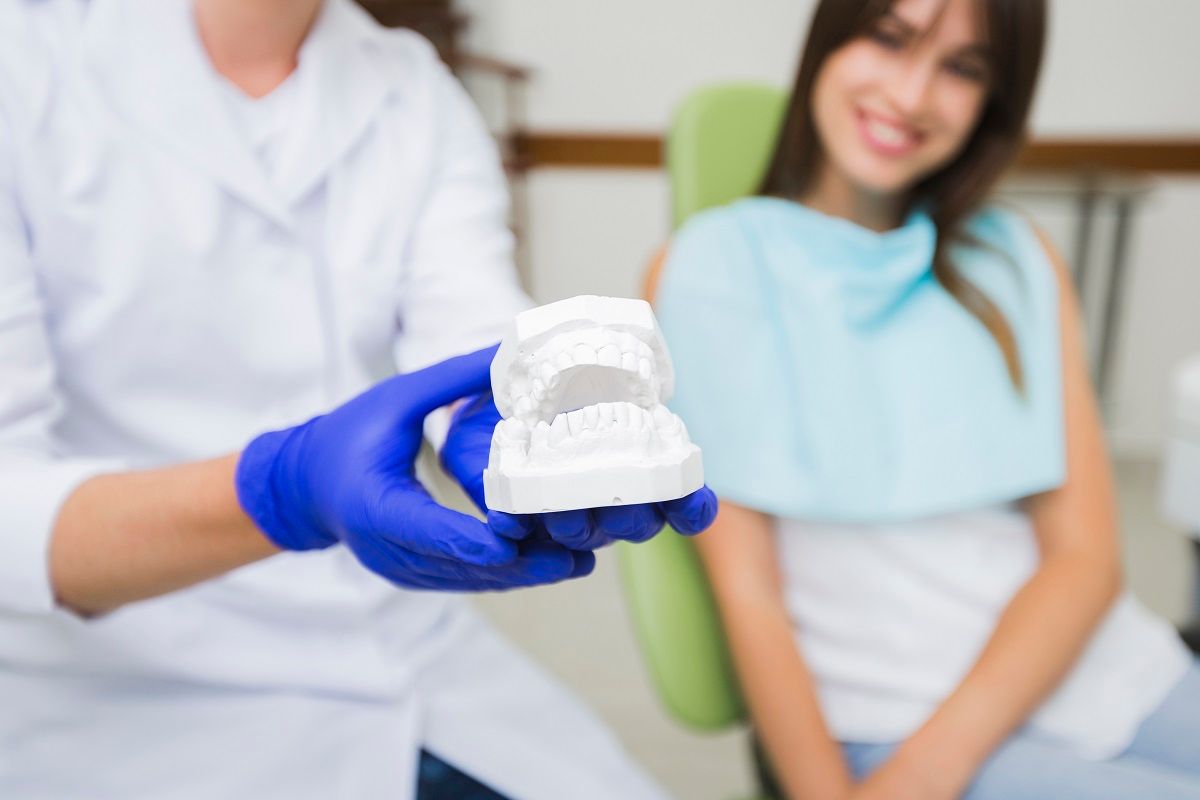
Full vs. Partial Dentures, which can be a better option?
Noble Dental Care
July 26, 2022
Losing adult teeth can affect far more than appearance. Chewing may become harder, speech can change, and the cheeks or lips may lose support over time. Patients comparing Full & Partial Dentures in Union City often want a solution that restores daily comfort without making treatment feel confusing. Both full and removable partial dentures can replace missing teeth, but the better choice depends on how many healthy teeth remain, your gum condition, and your long-term goals. A clear comparison can help patients from Union City, Fremont, Newark, and Hayward understand their options with more confidence.
What are Full Dentures?
A full denture is a custom appliance made with replacement teeth attached to a gum-colored base. It is used when all natural teeth in the upper jaw, lower jaw, or both arches need replacement. Once fitted, the denture supports the mouth, restores the look of a complete smile, and helps patients chew and speak more comfortably.
Because full dentures are placed after tooth removal, the gums often need time to heal. Conventional full dentures are usually made after healing has progressed, which may take several weeks. According to MedlinePlus denture guidance, complete dentures replace an entire upper or lower jaw, while partials replace only selected teeth.
Immediate full dentures may also be available for some patients. These are placed soon after extractions, so the patient does not have to remain without teeth during the early healing stage. Adjustments are often needed later because gum and bone tissues naturally change shape as they recover.
Pros of Full Dentures
- They replace an entire upper or lower arch
- They are removable for cleaning and care
- They can support long-term daily function
- They create a natural, complete smile
Cons of Full Dentures
- Without implants, they may feel less secure during meals
- Some hard, sticky, or chewy foods may need limits
What are Partial Dentures?
Partial dentures, also called removable partial dentures, replace one or more missing teeth while keeping healthy natural teeth in place. They usually include artificial teeth, a gum-colored base, and a supportive framework or clasps. For patients researching Full & Partial Dentures in Union City, partials may be helpful when tooth loss is limited. You can also review types of upper partial dentures for more detail.
Pros of Partial Dentures
- You do not need to remove every natural tooth
- They often require less replacement work than full dentures
- They can close visible gaps caused by missing teeth
- They help distribute chewing pressure and protect remaining teeth
Cons of Partial Dentures
- They may take time to feel comfortable and natural.
Which can be a better option for you?
Every mouth has a different level of tooth loss, gum support, and bite stability. Some patients benefit from a complete denture when only a few weak teeth remain, while others are better served by partial dentures because several healthy teeth can still support function. A Dentist Union City patients trust can examine your mouth before recommending either option.
In many cases, partial dentures are preferred when enough natural teeth remain strong and stable. Full dentures may be better when an entire arch is already missing or when remaining teeth cannot be predictably restored. Patients comparing denture choices near Newark, Fremont, or Hayward may also find implant dentures versus traditional dentures useful when thinking about comfort and stability.
Final Remarks
Tooth replacement should be planned around health, comfort, facial support, and daily confidence. Full dentures and partial dentures can both improve chewing, speech, and smile balance, but they serve different needs. A careful exam helps determine whether remaining teeth should be preserved or replaced for a more stable result. When you need guidance from a Union City Dentist, a personalized denture consultation can make the decision easier.
Contact your dentist in Union City, Dr. Zafar Sayeedi at Noble Dental Care to know more about full and partial dentures.
Share This:
Disclaimer
This media/content or any other on this website does not prescribe, recommend, or prevent any treatment or procedure. Therefore, we highly recommend that you get the advice of a qualified dentist or other medical practitioners regarding your specific dental condition.
Related Articles
Implant Supported Bridges and Dentures: Which is the Better Option?
Compare implant-supported bridges and dentures, learn key pros and cons, and see which dental implant option may fit your smile.
How can Implant Supported Bridges protect your teeth from further damage?
Learn how implant-supported bridges protect teeth, preserve bite balance, and support long-term dental implant care in Union City.
A guide on the best materials for Full & Partial Dentures
Compare full and partial denture materials, comfort, fit, durability, and care needs to choose the right tooth replacement option in Union City today.
Types of Dental Bone Grafting you need to know.
Learn when dental bone grafting or sinus lifting may be needed before implants, how graft types differ, and what supports long-term smile restoration.