
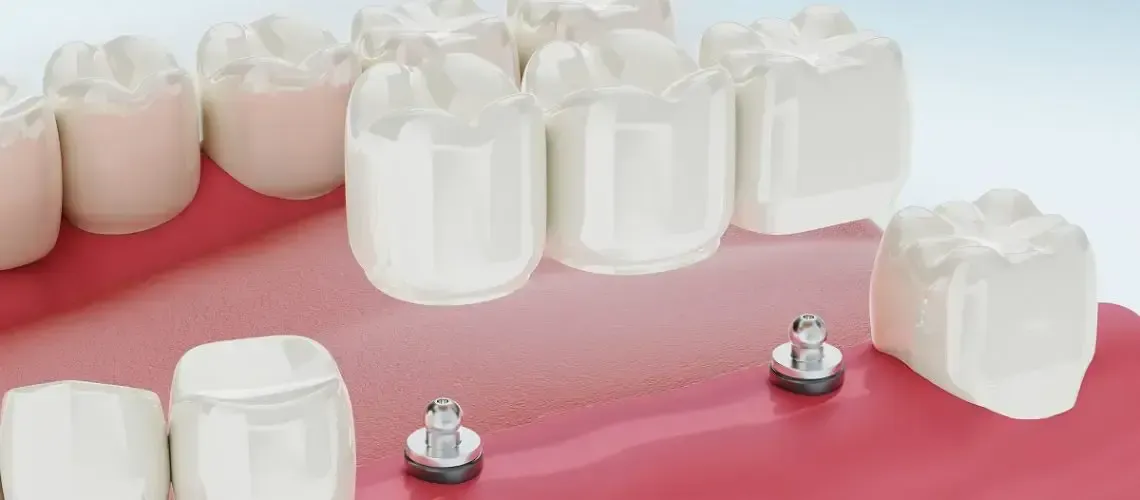
How can Implant Supported Bridges protect your teeth from further damage?
Noble Dental Care
March 2, 2023
If you are missing several teeth, it is easy to worry about chewing, speech, smile confidence, and the health of the teeth that remain. Modern implant dentistry gives patients a stronger option than removable appliances alone. For people comparing Implant Support Dentures in Union City, implant-supported bridges may provide the stability, comfort, and natural function needed for everyday life.
Patients from Union City, Fremont, Newark, and Hayward often ask whether implants can also protect nearby teeth from future damage. The answer depends on bone health, bite balance, gum condition, and the number of missing teeth. A careful evaluation helps determine whether a Dental Implant Union City solution can support long-term oral health.
A comprehensive guide on how implant-supported bridges can better protect your teeth from damage.
Implant-supported dental bridges are designed to replace missing teeth without relying on neighboring natural teeth for support. This makes them different from traditional bridges, which usually require reshaping nearby teeth. By anchoring the bridge to dental implants, the restoration can improve chewing strength, restore appearance, and reduce pressure on surrounding teeth.
For many patients, the major benefit is not only replacing what is missing but also preserving what is still healthy. Implant-supported bridges can help maintain bite alignment, limit unwanted tooth movement, and provide a stable base for daily function. Patients researching implant-supported bridges and dentures can better understand why the right plan matters.
So, here we go:
Introduction to dental implant-supported bridges.
Implant-supported bridges use titanium implant posts and custom restorations to replace missing teeth in a fixed and natural-looking way. Unlike removable dentures, the bridge is supported by implants placed in the jawbone, creating a foundation that feels more secure during chewing, speaking, and smiling.
The process requires healthy bone volume and careful planning. Your dentist will evaluate gum health, jawbone density, bite force, and oral hygiene habits before recommending treatment. This is especially important for patients seeking Implant Support Dentures in Union City or fixed implant bridge options near Fremont and Newark.
How do implant-supported bridge procedures work?
The treatment procedure for implant-supported bridges is usually completed in several planned stages. These often include:
- First, your dentist performs a detailed consultation, digital imaging, and oral health evaluation to confirm whether implants are appropriate for your mouth.
- Next, implant posts are placed in carefully selected areas of the jaw where bone support is strongest and most suitable for the bridge.
- The healing phase allows the implants to fuse with the jawbone, creating a strong base for the final restoration.
- After healing, impressions or digital scans are taken so the bridge can be customized for your bite, smile shape, and facial balance.
- Connector pieces are attached to the implants, allowing the final bridge to sit securely and function with stability.
- Finally, the customized restoration is placed, adjusted, and checked so it feels comfortable while eating and speaking.
Implant Supported Bridges benefits you need to know.
Fortunately, implant-supported bridge benefits are multiple. They can improve smile appearance, chewing strength, bite stability, and long-term oral function. More importantly, this option can help protect the mouth from additional problems caused by untreated tooth loss.
So, here we go:
- Better oral health
One of the most valuable benefits is improved oral stability. When teeth are missing, nearby teeth may begin shifting into open spaces. This movement can change your bite, create cleaning challenges, and increase the risk of future wear. Implant-supported bridges help fill the gap with a stable restoration.
Because the implants support the bridge, nearby teeth do not need to carry the same pressure. This can be helpful for people who want a long-term Dental Implant Union City option while preserving natural tooth structure. The FDA explains that dental implants are placed in the jaw to restore chewing ability or appearance, which supports why planning matters for stable results through this dental implant safety resource.
- Bone loss prevention
Tooth roots stimulate the jawbone during chewing. When a tooth is lost, that stimulation decreases, and the bone in that area can begin to shrink over time. Dental implants help replace the missing root function by transferring chewing forces into the jawbone.
This support may help preserve the shape of the jaw and reduce changes that affect facial appearance. It can also improve the foundation for the restoration. Patients in Hayward or Newark who have waited after tooth loss may need bone evaluation before deciding on implant-supported bridge treatment.
- Natural teeth retention
A traditional bridge often requires reshaping adjacent teeth, even if those teeth are healthy. Implant-supported bridges avoid this concern because the implant posts support the restoration instead. This helps maintain natural tooth enamel and reduces unnecessary alteration of neighboring teeth.
When healthy teeth remain untouched, they may be easier to maintain over time. This is one reason many patients compare implant bridges with other tooth replacement options before choosing a plan. For broader replacement cases, All on Four vs. All on Six dental implants may also be useful reading.
- Enhanced stability
Implants are positioned in the jawbone and become part of the mouth’s support system after healing. Because of this, implant-supported bridges can feel more secure than many removable appliances. Patients often notice better confidence while chewing, speaking, and smiling.
A stable base also helps distribute bite pressure more evenly. When forces are better managed, the risk of overloading nearby teeth may be reduced. This can be especially helpful for patients who have already experienced cracking, shifting, or discomfort after tooth loss.
- No effect on your healthy teeth
With a traditional dental bridge, neighboring teeth often become anchor points. These teeth may need crowns or reshaping to hold the bridge in place. While traditional bridges can be effective, they may place added stress on teeth that were otherwise healthy.
Implant-supported bridges are different. They use implants for support rather than depending on adjacent teeth. This makes the treatment attractive for patients who want to protect existing teeth while replacing missing ones with a stronger, more independent restoration.
- Cost-effective procedure than additional dental implants
Implant-supported bridges can replace multiple missing teeth without placing one implant for every tooth. In many cases, two or more implants can support a bridge across a larger gap. This can make the treatment more practical than replacing each missing tooth separately.
The exact recommendation depends on bone structure, bite force, missing tooth location, and long-term goals. A dentist can explain whether a bridge, denture, or full-arch solution is the more appropriate investment for function and oral health.
- Improved and long-lasting results
With proper care, implant-supported bridges can provide long-term comfort and function. Daily brushing, flossing around the restoration, professional cleanings, and routine checkups are important for keeping the surrounding gums healthy.
Good maintenance also helps protect the implants from inflammation around the supporting tissues. While the bridge may eventually need replacement from normal wear, the implants themselves can often remain a dependable foundation when cared for properly.
- Improved appearance of your smile and better confidence
Missing teeth can change the way you smile, speak, and interact socially. An implant-supported bridge is customized to match your facial features, gumline, tooth color, and bite pattern. This helps the restoration blend naturally with the rest of your smile.
Patients often appreciate that fixed implant-supported bridges do not move the same way removable appliances can. This added confidence can make eating in public, speaking clearly, and smiling in photos feel more natural again.
- No alteration to your natural teeth
Another advantage is that the bridge does not require major changes to nearby natural teeth. In a traditional bridge, abutment teeth are reshaped to hold crowns. If those teeth later develop issues, the entire bridge may be affected.
By using implant support, the restoration protects adjacent teeth from unnecessary preparation. This approach can be valuable for patients who still have strong natural teeth on both sides of the missing area and want to preserve them.
- The closest solution to natural-looking teeth
Implant-supported bridges are designed to look, feel, and function similarly to natural teeth. Since implants sit in the jawbone, they provide a deeper level of support than surface-level tooth replacement options.
Once healed, the restoration can help restore chewing power, speech clarity, smile balance, and confidence. The goal is not only to fill a gap but also to support long-term oral function. With the right maintenance plan, implant-supported bridges can protect your bite and help prevent future complications.
Contact your Union City Dentist, Dr. Zafar Sayeedi, at Noble Dental Care to learn how implant-supported bridges may protect your teeth from further damage.
Resource:
Implant-Supported Bridges and Dentures: Which is the Better Option?
Share This:
Disclaimer
This media/content or any other on this website does not prescribe, recommend, or prevent any treatment or procedure. Therefore, we highly recommend that you get the advice of a qualified dentist or other medical practitioners regarding your specific dental condition.
Related Articles
Implant Supported Bridges and Dentures: Which is the Better Option?
Compare implant-supported bridges and dentures, learn key pros and cons, and see which dental implant option may fit your smile.
Dental Implants Explained: How They Restore Missing Teeth
Learn how dental implants replace missing teeth, restore chewing function, support jawbone health, and help patients smile confidently at Noble Dental Care in…
Benefits of Dental Crowns and Bridges: Beyond Aesthetics
Learn how crowns and bridges restore chewing, protect weak teeth, replace missing teeth, and support better oral health with Noble Dental Care in Union City.
Types of Dental Bridges: Bridging the Gap in Your Smile
Compare traditional, cantilever, Maryland and implant-supported dental bridges, with the strengths and best uses of each type.