
Step-by-Step Guide to Root Canal Therapy Union City
by Noble Dental Care
September 3, 2025

A Root Canal in Union City is one of the most effective treatments used to save a severely damaged or infected tooth before extraction becomes necessary. Many patients feel nervous before treatment because they are uncertain about what happens during the procedure. At Union City Dentist, patients are guided through every step with comfort-focused care and modern technology. If you are exploring root canal treatment options, understanding the process can make the experience feel far less intimidating.
This guide explains the complete Union City Root Canal process in clear detail so patients from Fremont, Newark, and Hayward know what to expect before, during, and after treatment. By learning about each stage, you’ll see that root canal therapy is designed to relieve discomfort, preserve your natural tooth, and support long-term oral health.

Understanding the Root Canal Procedure
A root canal procedure is recommended when the inner part of the tooth, known as the pulp, becomes inflamed or infected. The pulp is made up of nerves, blood vessels, and connective tissue that play an important role in helping the tooth grow during its early development. However, once a tooth is fully developed, it can survive without pulp because the surrounding tissues continue to provide nourishment and support.
When bacteria reach the pulp—most often due to deep tooth decay, cracks, or injury—it can trigger several painful and noticeable symptoms.
Step 1: Initial Examination and Dental X-ray
The first step of the root canal procedure begins with a detailed examination to assess the condition of the affected tooth. During this stage, your dentist carefully inspects the tooth and takes a dental X-ray to gain a clear understanding of what’s happening inside. While this step may seem routine, it is one of the most essential parts of treatment. The X-ray allows the dentist to see the exact shape and length of the root canals, helping them detect any signs of infection in the surrounding bone that may not be visible otherwise.
Step 2: Numbing the Tooth
One of the most common questions patients have is, “Is the root canal procedure painful?” The reassuring answer is no. Before beginning any part of the treatment, your dentist will administer local anesthesia to completely numb the affected tooth along with the surrounding gums. This ensures you remain comfortable and pain-free throughout the process. You may feel a slight pinch when the anesthesia is given, but once it takes effect, you will stay awake and alert without experiencing sharp pain.
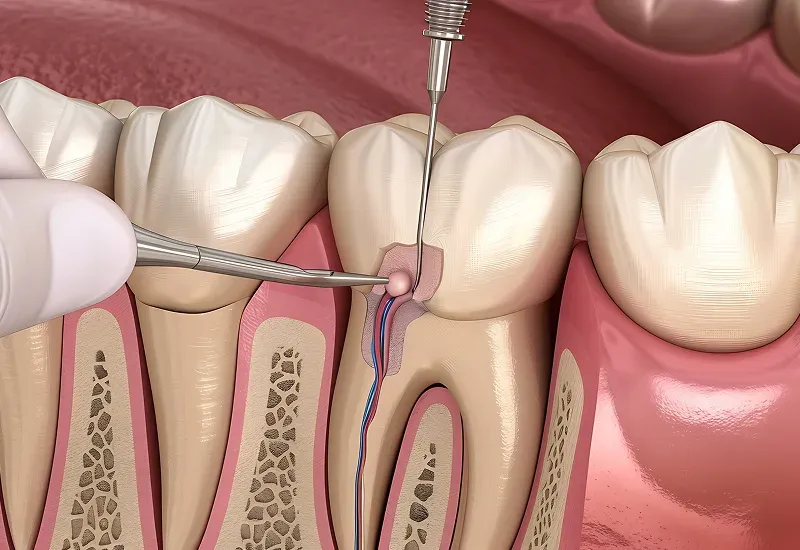
Step 3: Creating Access to the Pulp
After the tooth is completely numb, the dentist begins by making a small opening in the top of the tooth to access the infected pulp inside. This entry point is usually created using a dental drill or, in some cases, a laser, and the opening is kept as minimal as possible to preserve the natural structure of the tooth. Creating this passage is essential, as it provides access to the intricate canal system within the tooth.
Step 4: Pulp Removal
Once access has been created, the dentist carefully removes the diseased or dead pulp using delicate instruments known as endodontic files. These tools are designed to thoroughly clean the pulp chamber and root canals. This stage is one of the most important parts of the procedure, as pulp removal eliminates the infection at its source, relieves the pressure that causes tooth pain, and prevents bacteria from spreading to nearby teeth or bone. Many patients begin to feel a sense of relief at this point, as the underlying cause of their discomfort is finally being addressed.
Step 5: Cleaning Tooth Canals
After the pulp is removed, the dentist focuses on shaping and disinfecting the root canals. This step goes far beyond a simple rinse—it involves a detailed and precise cleaning process. The canals are slightly enlarged to allow complete removal of debris, while antibacterial solutions are used to flush out any remaining bacteria. The dentist carefully ensures that the canals are smooth, clean, and fully prepared for sealing.
Step 6: Sealing the Tooth
Once the canals are completely cleaned and disinfected, the next step is sealing them to prevent reinfection. The dentist fills the canals with a biocompatible material known as gutta-percha, which is soft enough to fit snugly and tightly within the canal walls. This material effectively blocks bacteria from re-entering the tooth and ensures long-term protection. In some cases, if the treatment requires an additional visit, a temporary filling may be placed to keep the tooth sealed until the next appointment.
Step 7: Final Restoration
After the inside of the tooth has been thoroughly treated and sealed, the focus turns to restoring the outside for strength and function. A tooth that has undergone a root canal can become brittle over time, so it requires additional support to withstand daily use. For back teeth, which endure heavy chewing forces, a dental crown is usually recommended to provide durability and protection. In the case of front teeth, which experience less pressure, a filling may be sufficient to restore the tooth. This final step ensures that the treated tooth not only looks natural but also feels and functions like a healthy, strong tooth for years to come.
Recovery and Care After the Procedure
After a root canal procedure, most patients can resume their normal activities on the same day, though mild tenderness or sensitivity is common for a few days. To support recovery, you can take over-the-counter pain relief if recommended, avoid chewing hard foods on the treated tooth until it has been fully restored with a crown, maintain daily brushing and flossing, and continue attending regular dental check-ups to ensure proper healing and long-term success.
FAQs
What happens during a root canal?
The dentist removes the infected pulp, cleans the canals, and seals the tooth to prevent reinfection.
Is the root canal procedure painful?
No. With modern anesthesia, you won’t feel pain. Most patients report that the procedure feels similar to getting a routine filling.
How long does a root canal take?
It depends on the tooth. A single-root tooth may take less than an hour. Molars with multiple roots can take longer, and sometimes two visits are required.
Will I be awake for my root canal?
Yes, but you’ll be numb and comfortable. You’ll feel pressure but not pain.
What happens if I avoid getting a root canal?
Delaying treatment allows infection to spread, potentially leading to swelling, bone damage, or tooth loss.
Conclusion
Although many people feel anxious when they hear the words “root canal,” understanding the process often makes the experience much less stressful. From diagnosis and cleaning to sealing and restoration, every step of Root Canal Therapy Union City providers perform is focused on eliminating infection and preserving your natural smile.
Delaying treatment can allow infection to spread deeper into the tooth and surrounding tissues. Patients throughout Hayward, Newark, and nearby communities benefit from timely care that reduces pain and prevents more extensive procedures later.
If you are experiencing tooth sensitivity or persistent pain, scheduling a consultation with a Dentist Union City patients trust can help you protect your oral health. Learn more about advanced root canal services and explore related articles like long-term root canal success rates and how many visits a root canal may require.
For additional educational information, visit the American Association of Endodontists.
Share This:
Disclaimer
This media/content or any other on this website does not prescribe, recommend, or prevent any treatment or procedure. Therefore, we highly recommend that you get the advice of a qualified dentist or other medical practitioners regarding your specific dental condition.
Related Articles
What are the 4 stages of root canal treatment, and how long may it take to recover?
What are the 4 root canal stages? Learn treatment steps, recovery time, aftercare tips, and when to visit a Union City dentist for tooth pain.
What Is a Root Canal? Understanding the Basics
Learn about Union City Root Canal procedures, benefits, and recovery. Expert Root Canal Therapy Union City from a leading Union City Dentist.
How Long Does a Root Canal Take and How Many Visits?
Learn how long a Union City Root Canal appointment may last, whether multiple visits are needed, and what recovery involves.
Why getting Root Canal treatment is a good option?
Discover the advantages of root canal treatment at Noble Dental Care. Uncover why it's a wise and effective option for preserving your oral health and smile.